

ART BOOMERS !
The Whitney Biennial, Ripped Junya Jackets, Falling Walls

It’s fun and popular and probably right to criticize the Whitney Biennial.
Everyone does this differently, Hilton Als’ described the Biennial as “Chat GPT Art,” to him indicated by “facsimiles of facsimiles by makers who have little if any relationship to what they’re putting out there, aside from its being a product in service of a career.” Als sees no “acknowledgment of the artists who paved the way” in the Whitney’s roster, and a lack of individual artistic voice. To Als these artists focus on clout and career. This, according to Als, stunted the show from being political or interesting.
Another critical voice came from Aziz Hazara, an artist from Afghanistan who said that when he was invited to participate he wondered ‘What is my relationship with the American Empire?’ The irony of the Whitney is really the central contradiction of the commercial art world: subversiveness sanctioned by the global hegemony of arms dealers and technocrats looking for clout or investment.
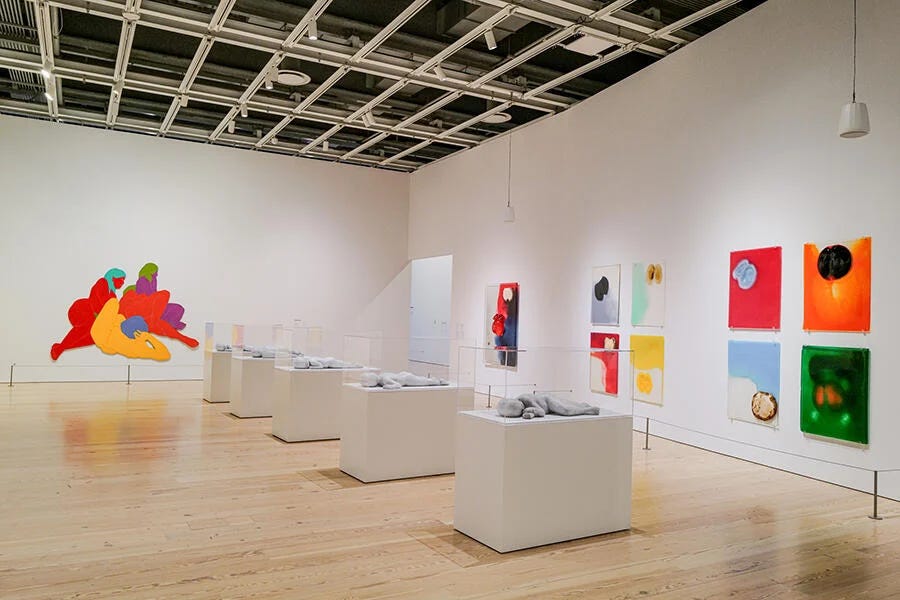
The function of the Biennial is on one hand relevance - to compose a holistic artistically articulate responses to the times (whatever that means.) The modern infrastructure of the Whitney could never do this. Perhaps that cynicism is why I was so fascinated by Als’ decision to single out this Biennial as uniquely derivative, and its artists as specifically plagiaristic. To me this was a show of riveting and complex and simplistic and bad and beautiful work. In other words, a large art show featuring widely varied ways of engaging with art that are bound to be occasionally alienating. What the Biennial can do is reflect the system it enforces, and that is at least consistently interesting. If you think the Biennial is mediocre, well, that’s the state of American resistance politics for you. If you think beauty was drowned out in the noise, is that not a reflection of algorithmic art production?
Als sees the extremity of the times and wishes revolutionary stuff from the institutions that literally tear-gassed it into existence. Als’ vitriol comes from the fact that he is looking in the wrong places. He is attending another Whitney Biennial, another white walled monied art institution hoping to convince an elite audience they have captured grit.
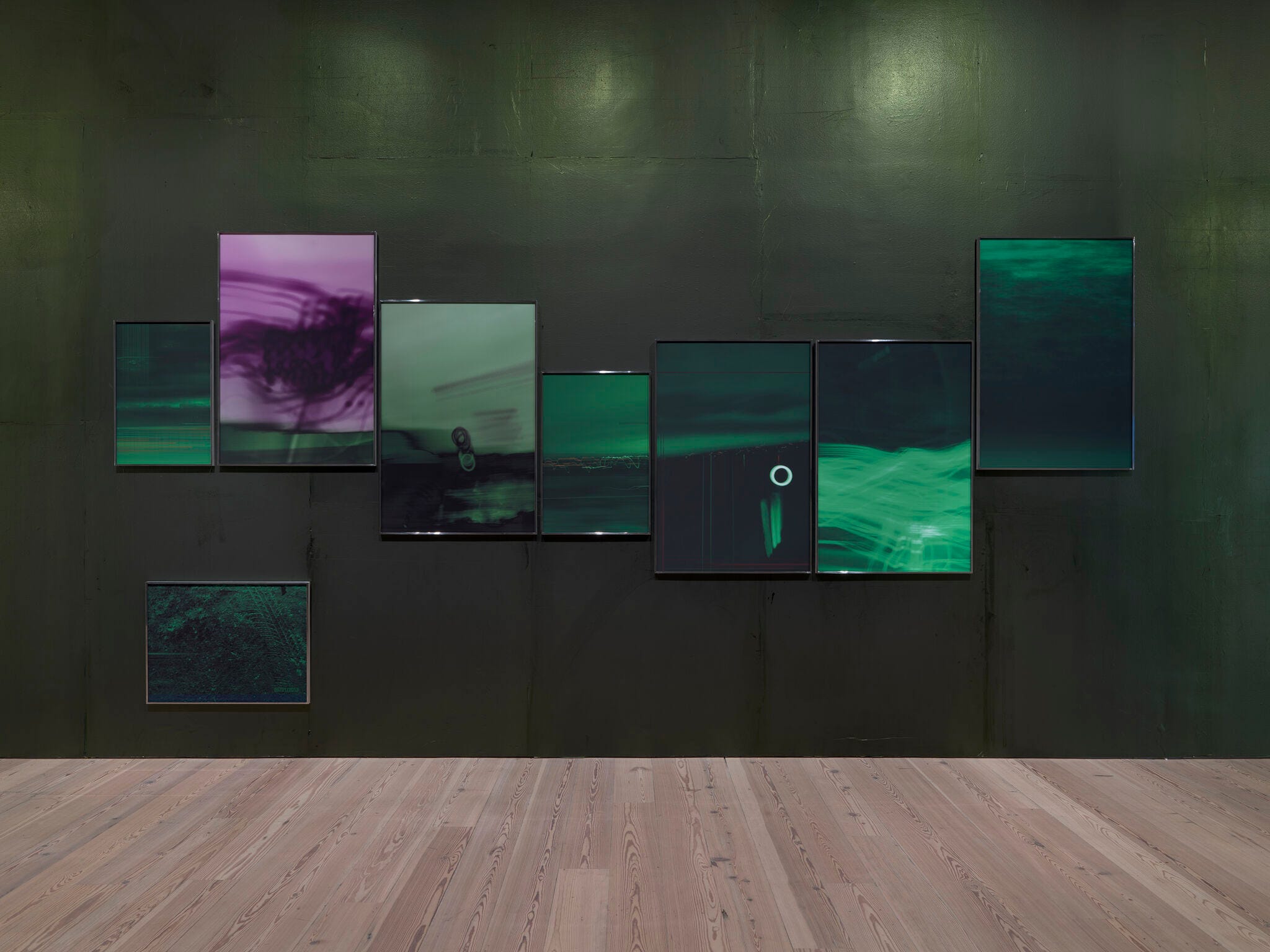
People were insistent, regardless, that the Whitney could have curated something more political. Aruna D’Souza encapsulates the starry eyed vision of art that meets the moment by writing “every single work in the show was political, but that politics was filtered through art, always. That will not sit well with people who want answers to our current overlapping crises — and believe art can provide them.” For instance, Als criticizes Aziz Hazara’s colorfully abstract pieces created from retinal scans and biometric data that he extracts from night-vision goggles frequently left behind in conflict zones by foreign military forces. Als did not like it because he felt it looked too similar to Wolfgang Tillmans. This is political, but it is not an answer to a question. It’s art.
Is the American creative class given the environments, contexts, or training to produce work as prescient or “original” as those Als mentions? How can any young artist getting their work exhibited at the scale of the Biennial afford to create something that does not consider their career? Inversely, how can they afford to make something that is truly revolutionary - that rattles the bars of the Whitney’s conservative art structures, enlightened as they may be? “The answers for younger artists ” Josh Kline writes in his painstaking diagnosis of modern American art, “are likely not in New York and not in the American art industry, for which the art of the present and the art of the future are not as important as the art of the past.”
In sum, okay boomer. The class of arts critics unable to study and internalize the modern realities of artists are as pernicious as anti intellectual zoomers. They flatten art. They misdiagnose its ability. In misunderstanding the moment they fail to conceive how art can meet the moment.
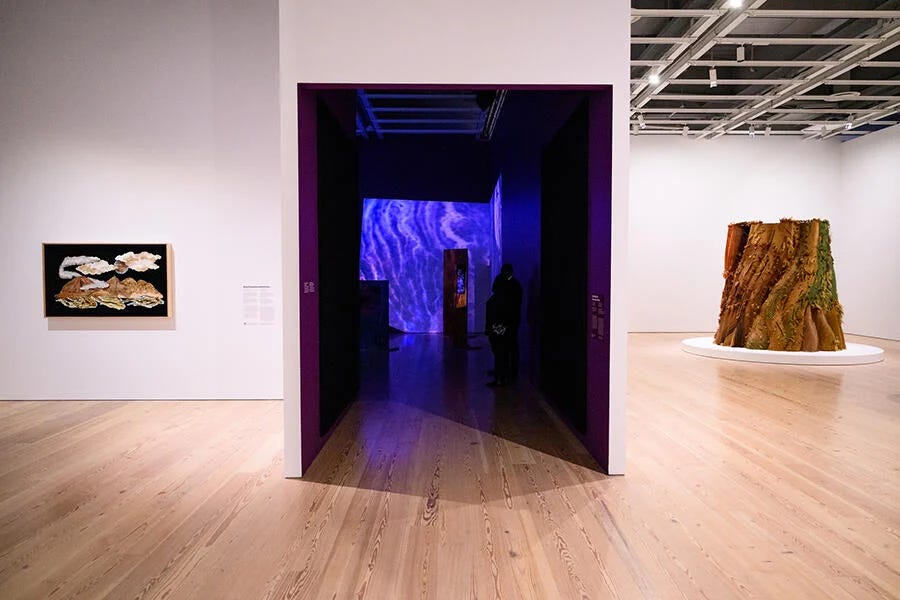
To meet the Biennial at its own self seriousness is a missed opportunity. To me, it is Hazara’s description of the Biennial as a part of the” American Empire” that shows subversive art must be conscious of more than content, but setting. The Whitney has not been the setting for notable artistic subversion in a good while. And still, the Whitney allows an artist like Hazara and others the audience and attention and funds to better build independence, and who can fault them for that?
Als isn’t wrong for having high standards, but his frustration is deeply misdirected.
Speaking of looking in the wrong places for revolutionary art, I wonder what Als would think of any major fashion week from the last five years.
Fashion critics have decried the industry’s allergy to originality to the point that it is almost cliche. The fashion industry’s youngest are scolded for producing endless and empty archive references, but even the old auteurs resort to it when pockets are light. Most widely discussed/viewed shows by major houses are a handful of popular past designs collaged together.
Junya Watanabe is often guilty of this, particularly when it comes to his menswear. In the last five years he’s mined motifs from his most lauded collections of the early 2000s and late 2010s: SS18’s Carhartt coats, FW15’s suiting, 2006’s military fabrics and asymmetrical closures. SS26 involved near exact reproductions of FW04 blazers, from fabric of embroidered pineapples to marmalade arabesques. You can call this lazy, or service for nerdy fans like myself who scour the internet for these things in impossible larges and extra larges. FW04 also happens to be one of the few Watanabe menswear shows mostly unavailable online.


Among the repros are blazers, sweaters, and chore coats depicting intricately embroidered scenes: houses, Italian streets, farm animals, and other romantic visions. One jacket in particular gave me pause. It depicted a stately university building in minute embroidery and it was shredded. Fabric pulled and stretched into webs in the space of the yard in front of the house, near the hem and on the sleeves. Suddenly I realized even Watanabe’s archive striped blazers were pockmarked with holes and roughness in the velvet. His dreamy 20 year old fabrics pilled and tore, creating a shredded landscape imperceptible to the digital e-commerce eye.


Distressed garments are “in fashion” to everyone’s chagrin. It’s discourse as old as the emperor’s new clothes and Marxism; old looking things designate the clout of buying high quality, mending well, or that the wearer is too cool to care. If anything, the agedness of a garment adds an artisan effect that retains if not increases the price of things. Some vintage dealers expressly buy and sell “thrashed” garments.
In this case, wearing Watanabe’s SS26 reproductions make it look like you owned the original FW04 jackets, which ironically, would look “newer” than the new ones. And yet, Watanabe’s highlight of the fabrics imperfection makes them naturally distressed, perpetually worn. Distress is the garment’s resting state, it is never designed to be new. To wear an original FW04 blazer for 20 years, it would inevitably rip or pill. A pre-soiled SS26 reproduction looks slightly askew after double the time.
Watanabe seems to say, “you cannot recreate the old and claim it as totally new.” To love what is old you must appreciate more than design, you must venerate dust and tears and pilled cloth. For the dated to exist anew, a wearer cannot be spared from its datedness. Watanabe is one of the few designers turning the veneration of his archive into a more vibrant conversation about what we expect from clothing, what we ask from it, and accepting the artistry of decay. This totally rebukes the ready to wear, seasonal model of clothing, and it is the future.
As fashion’s standards collapse in on themselves, Watanabe asks us to feel, if not ride the dusty fall.


Shortly after seeing Watanabe’s jacket I encountered David Lamelas’ 1993 sculpture Untitled (Falling Wall) resuscitated in Dia Chelsea’s gaping warehouse gallery. The sculpture is a large white wall falling down, supported by a few precarious wooden beams. It is perpetually falling. A 30 year testament to making meaning out of doom, untitled is a piece of art that is about space while also being composed of an art space (the white walled gallery opening up or breaking apart.)
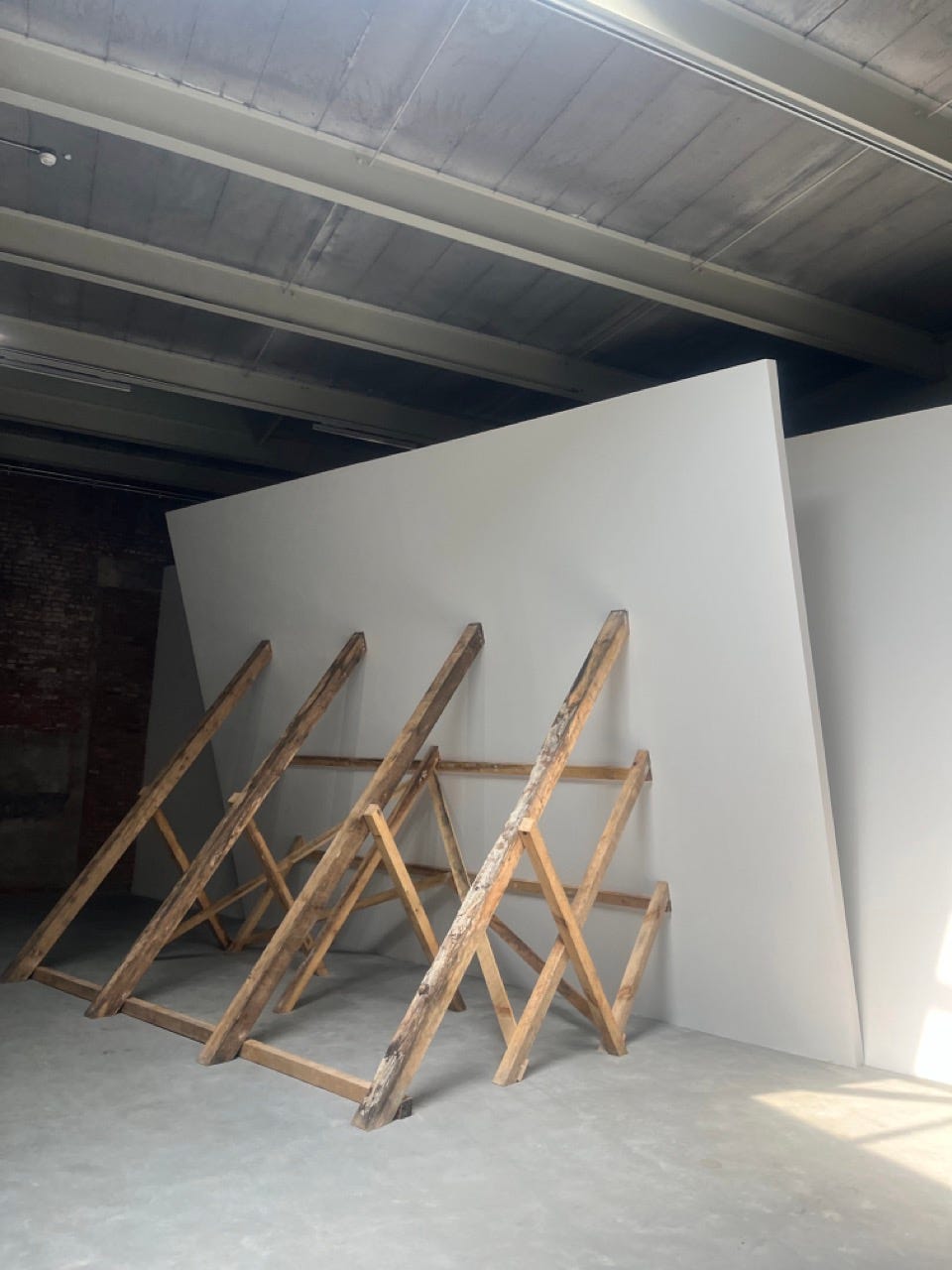
Like one of Watanabe’s old/new jackets, we are asked to participate in, if not witness a bit of collapse. Reconstructing Untitled 33 years later acts like a check in, confirming that our art infrastructures continue to topple slowly, destroyed and waiting for destruction all at once.
I was surprised by the similar contexts of these two men. Watanabe and Lamelas started working at almost the same time, Watanabe with the forced optimism of an inadvertent industrial and Lamelas with an artistic sentiment that has only retained its cynicism. Now, both artists make a point to inject subversion into their respective artistic infrastructures: the ready to wear retail model and the art gallery. At the thirty year mark they can afford to do it, and as niche artists they have seen these systems work and they have seen them fail.
What I appreciate about Watanabe & Lamelas is their ability to craft subversive work that allows the audience to internalize change, whether through the meta experience of considering the destruction of a gallery in a gallery, or the act of simply wearing. These mediums bridge the potential gap of art and meaning because they are mediums based in pure experience. It isn’t just that this duo chooses their targets well, they know precisely how to shoot.
These are wizened artists from a time before. Mythologizing artists from this generation is connected to Hilton Als’ idea that revolutionary art can come from within the structures of empire. These are two highly established artists articulate in their mediums to criticize from within. Still, it seems essential to see even this as a form of capitulation, and as Hazara might say, a piece of empire.
The young artist is tasked then with the oxymoron of surviving and subverting. To be able to do both may be a simple manner of hope.